
2026-10-11 · David Ramirez
Tree Roots Blocking Sewer Lines in Glendora Neighborhoods
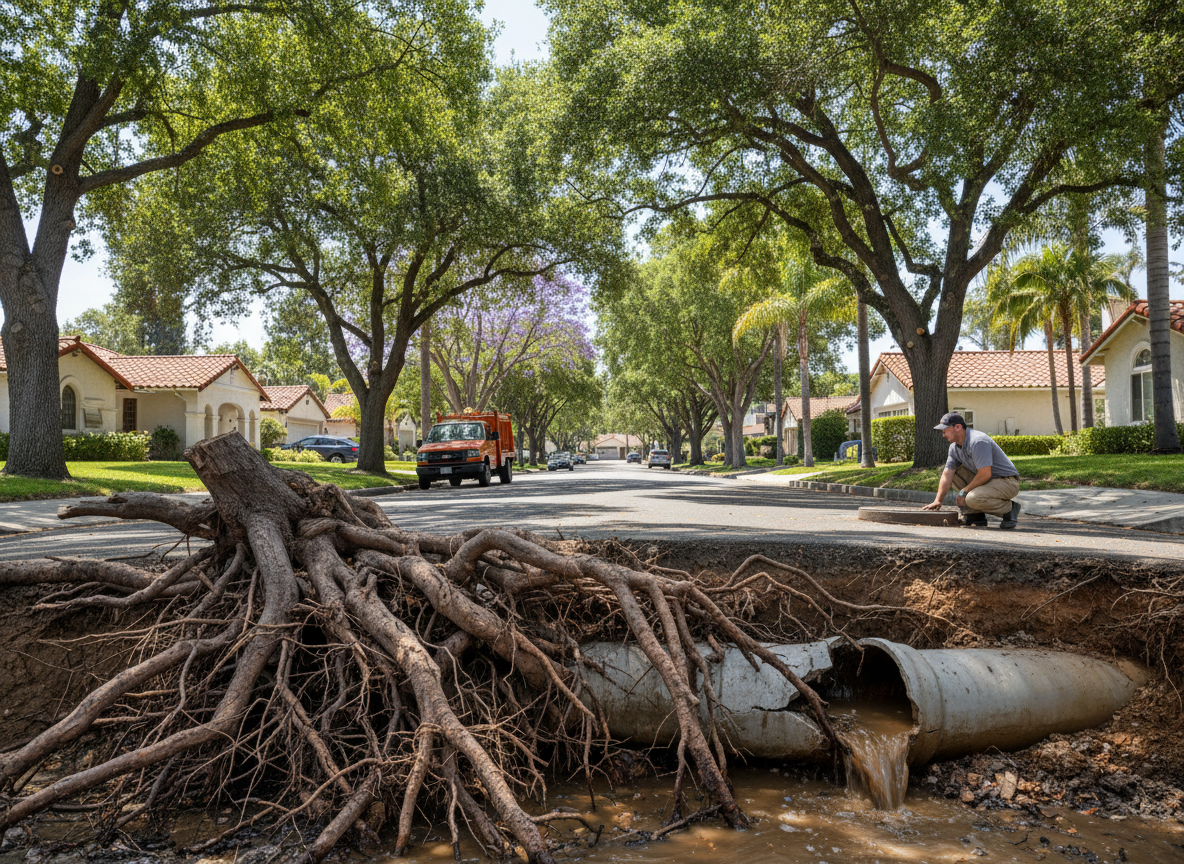
Tree roots can absolutely block sewer lines in Glendora neighborhoods, and it's a problem we tackle regularly, especially in areas with mature trees and older plumbing infrastructure. In places like Downtown Glendora or Glendora Village, where homes often date back decades and grand oak trees line the streets, root intrusion is a leading culprit for slow drains and sewage backups. The Mediterranean climate, with its hot, dry summers, drives roots deeper into the ground in search of moisture, making sewer lines, with their constant water supply, an irresistible target. This issue isn't just an inconvenience; left unaddressed, it can lead to costly pipe damage and major sewage problems for homeowners across Glendora and into neighboring cities like Azusa and Covina.
Why Glendora's Trees Seek Out Sewer Lines
Glendora's beautiful, established neighborhoods, from the foothills near Big Dalton Canyon down to South Glendora, boast a rich canopy of trees that contribute significantly to the area's charm. However, these very trees, including common varieties like sycamores, ficus, and even some types of palms, have extensive root systems that are naturally drawn to water and nutrients. Sewer lines, with their constant flow of wastewater, provide exactly what these roots are seeking, particularly during our long, dry summers. Even the smallest crack, loose joint, or compromised seal in a sewer pipe acts as an invitation for these tenacious roots to penetrate. Once inside, they grow rapidly, forming dense masses that can completely obstruct the flow of wastewater, leading to frustrating and often messy backups. The older clay or cast iron pipes common in many Glendora homes are particularly susceptible compared to newer PVC lines.
Identifying the Signs of Root Intrusion
Recognizing the early warning signs of tree root intrusion can help you address the problem before it escalates into a major emergency. One of the most common indicators is slow-draining fixtures throughout your home, not just one isolated sink. If your toilets are flushing sluggishly, or your bathtub takes an unusually long time to drain, it could point to a main sewer line issue. Another tell-tale sign is gurgling noises coming from your toilets or drains, especially after running water elsewhere in the house. You might also notice sewage odors emanating from drains, indicating a blockage that's preventing proper ventilation. In severe cases, you could experience sewage backups in your lowest drains, like a shower or toilet, which is a clear sign that the main line is severely compromised. If you notice any of these symptoms, it's wise to consider a professional sewer camera inspection to pinpoint the problem.
The Impact of Root Blockages on Glendora Homes
The consequences of unaddressed tree root blockages can range from minor annoyances to significant property damage. Initially, you might just have slow drains, but as the roots continue to grow, they can create complete blockages, leading to sewage backing up into your home. This not only creates an unsanitary environment but can also cause extensive damage to flooring, walls, and personal belongings, requiring costly remediation. Beyond blockages, the persistent pressure from growing roots can actually crush or crack sewer pipes, leading to leaks that can undermine your home's foundation or create saturated areas in your yard. The cost of repairing or replacing damaged sewer lines due to root intrusion can range from $2,000 to over $10,000, depending on the extent of the damage and the method of repair. Proactive measures, such as regular inspections and root removal, are far less expensive than emergency repairs.
Effective Solutions for Tree Root Removal
When tree roots invade your sewer lines, several effective solutions are available to restore proper flow and prevent future issues. The first step is often a sewer camera inspection to accurately locate the blockage and assess the pipe's condition. For minor to moderate root intrusions, a professional rooter service can use specialized cutting tools to clear the roots from the pipe. This method involves sending a rotating blade through the pipe to cut and dislodge the root masses. For more stubborn or recurring blockages, or if the pipes are significantly compromised, hydro jetting is an excellent option. This technique uses high-pressure water streams to thoroughly scour the inside of the pipe, effectively removing roots, grease, and other debris, leaving the pipe walls clean. You can learn more about this powerful cleaning method on our [/services/hydro-jetting-and-high-pressure-line-flushing] page. In cases of severe pipe damage, repair or replacement of the affected section may be necessary, sometimes utilizing trenchless methods to minimize disruption to your property.
Prevention is Key in Glendora
Preventing tree root intrusion is always more cost-effective than dealing with a full-blown blockage. If you're planning new landscaping, choose slow-growing trees or shrubs with non-invasive root systems and plant them a safe distance from your sewer lines—ideally at least 10–15 feet away. For existing trees, consider installing a root barrier between the tree and your sewer line, though this can be a significant undertaking. Regular professional maintenance is also crucial. Scheduling an annual or bi-annual sewer camera inspection, especially for older homes in areas like North Glendora or near Glendora Mountain Road, can help identify early signs of root growth before they become problematic. We also recommend periodic rooter service or hydro jetting to keep pipes clear, particularly if you've experienced root issues in the past. These proactive steps can save you from the headache and expense of a sewer line emergency. For more details on how to tackle these issues, check out our article on [/blog/how-to-fix-tree-roots-in-sewer-pipes].